
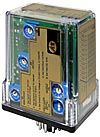
OVERVIEW
• DC Voltage Input: 0-5 mV to 0-1200 mV
• DC Output: 0-1 V, 0-5 V, 0-10 V, +/- 5 V, +/- 10 V, 4-20 mA, etc.
• Strain Gauge Bridge Excitation: 1 to 10 VDC
• Field-Configurable by User
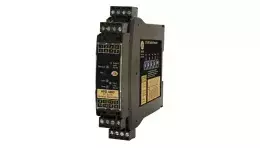
The API 4058 G accepts a strain gauge, bridge, load cell, or a summed input from up to four sensors, and provides
a proportional, non-isolated DC voltage or current output. It includes filtering and processing to allow effective use of lowlevel transducers in the noisy environments found in industrial applications.
The built-in 115 mA bridge excitation power supply generates a stable source of excitation voltage to drive from one to four 350 Ω (or greater) bridge type sensors such as load cells, pressure transducers and strain gauges The API 4058 G amplifies and converts the resulting millivolt signal into the selected output.
Input, output, excitation, and zero offset are field configurable, via external rotary and slide switches. Common ranges are on the module label. An offset switch is standard for applications requiring cancellation of sensor offsets or non-zero deadweights (taring). Zero and span potentiometers allow calibration of the output.
Options:
TECHNICAL SPECIFICATIONS
Input
Field Rangeable; Via external rotary & slide switches
Minimum range: 0 to 5 mV
Maximum range: 0 to 1200 mV
Minimum sensitivity: 0.5 mV/V
Maximum sensitivity: 120 mV/V
Millivolt output range is determined by the sensitivity of the sensor (mV/V) and the excitation voltage applied
mV/V sensitivity X excitation voltage = total mV range
Output
Field Rangeable; Via external rotary & slide switches
Voltage: 0-1 VDC to 0-10 VDC
or
Bipolar Voltage: +/- 1 VDC to +/- 10 VDC
or
Current (20 V compliance): 0-1 mADC to 0-20 mADC
Excitation
Field Rangeable; Via external rotary & slide switches
Range: 1 to 10 VDC, 115 mA max.
Features
Drive up to Four 350 Ω Bridges
Adjustable Excitation Power Supply
One Minute Setup for Hundreds of I/O Ranges
Easy-to-use External Switches for Setup
Hot-Swappable Plug-In Design
Input and Output LoopTracker® LEDs
Adjustable Output Test
Internal Calibration Resistor Option
Applications
Load Cell Weighing Systems and Scales
Strain Gauge Pressure Sensors and Transducers
Tanks, Scales, Extruder Melt Pressure, Crane Loads
DOCUMENTS & DOWNLOADS
VIDEOS
No Result Found
RELATED PRODUCTS
PRODUCT NUMBERS
Field Configurable Signal Conditioning for Load Cells, Bridges, and Pressure Transducers
The API 4058G Strain Gauge Bridge / Load Cell to DC Transmitter is a versatile, field-configurable signal conditioning module designed to convert low-level millivolt signals from strain gauges, load cells, and bridge-type sensors into stable DC voltage or current outputs. Engineered for industrial environments, the 4058G provides accurate amplification, filtering, and scaling of sensor signals, enabling seamless integration with PLCs, data acquisition systems, and process control equipment.
With built-in excitation power, flexible configuration options, and rugged industrial construction, the API 4058G is an ideal solution for applications requiring reliable measurement of force, weight, pressure, or strain.
Convert Low-Level Bridge Signals into Usable Outputs
Strain gauges, load cells, and pressure transducers typically produce very small millivolt signals that must be amplified and conditioned before they can be used by control systems. The API 4058G performs this critical function by converting these low-level inputs into proportional DC voltage or current outputs.
The module accepts inputs from:
Strain gauges
Load cells
Bridge sensors
Pressure transducers
It then provides a linearly related DC output signal that can be easily interpreted by downstream systems.
Supports Multiple Sensors and Bridge Configurations
The API 4058G is capable of driving and summing signals from multiple sensors, making it highly adaptable for complex measurement systems.
Supports one to four 350 Ω bridge sensors
Compatible with higher resistance bridges
Ideal for multi-sensor averaging or summation
This capability is particularly useful in applications such as weighing systems and distributed load measurement.
Built-In Adjustable Excitation Power Supply
A key feature of the API 4058G is its integrated excitation power supply, which provides a stable voltage to power connected sensors.
Adjustable excitation: 0 to 10 VDC in 1 V increments
Maximum output: 10 VDC at 115 mA
Stability: ±0.01% per °C
This eliminates the need for external excitation sources and ensures consistent sensor performance.
Wide Input Range for Flexible Sensor Compatibility
The API 4058G supports a wide range of millivolt inputs, making it compatible with a variety of sensor sensitivities.
Input range: 0 to 5 mV up to 0 to 1200 mV
Sensitivity range: 0.5 mV/V to 120 mV/V
The total input signal is determined by the sensor’s mV/V rating and the applied excitation voltage, allowing for precise configuration based on application requirements.
Flexible DC Output Options
The module provides multiple output configurations to match the needs of different systems:
Voltage outputs: 0–1 V to 0–10 VDC
Bipolar voltage outputs: ±1 V to ±10 VDC
Current outputs: 0–2 mA to 4–20 mA
This flexibility allows the 4058G to interface with:
PLCs and DCS systems
Data acquisition systems
Panel meters and recorders
SCADA systems
Field Configurable for Fast Setup
The API 4058G is designed for easy field configuration using external switches and adjustments.
Key configuration features include:
Rotary switches for input, output, and excitation selection
Slide switch for voltage or current output selection
Zero and span potentiometers for calibration
Offset adjustment for tare or sensor offset compensation
This “one-minute setup” approach allows users to quickly configure the module without specialized tools.
Offset and Tare Adjustment Capability
The module includes an offset adjustment feature, allowing users to compensate for sensor offsets or tare weights.
Zero offset adjustment: ±100% of span in increments
This is particularly valuable in weighing applications where the system must account for container weight or baseline conditions.
High Accuracy and Signal Quality
The API 4058G delivers precise and stable signal conditioning performance:
Linearity: ±0.1% of span
Noise and ripple: <10 mVRMS
Common mode rejection: 100 dB minimum
These specifications ensure accurate measurement and reliable operation even in electrically noisy environments.
LoopTracker® LEDs for Real-Time Monitoring
The API 4058G features built-in LoopTracker LEDs that provide visual feedback of system performance:
Green LED indicates input signal activity
Red LED indicates output signal activity
LED brightness varies with signal level
These indicators allow operators to quickly assess system status and identify potential issues during operation.
Output Test Function for Diagnostics
The module includes a functional test button that allows users to simulate an output signal for system verification.
Adjustable from 0 to 100% of output span
Independent of input signal
Useful for startup and troubleshooting
This feature helps reduce commissioning time and simplifies diagnostics.
Optional Internal Calibration Resistor
For applications requiring precise calibration, the API 4058G offers an optional internal shunt calibration resistor (M01 option).
Simulates known sensor output
Enables quick calibration without external equipment
Ideal for load cell and bridge calibration
Rugged Industrial Design
The API 4058G is built for reliable operation in demanding environments:
Operating temperature: –10°C to +60°C
Compact plug-in design
DIN rail or panel mounting with 11-pin socket
Hot-swappable module for easy maintenance
Its durable construction ensures long-term performance in industrial applications.
Typical Applications
The API 4058G is widely used in applications involving force, weight, and pressure measurement:
Load cell weighing systems and scales
Tank level measurement systems
Extruder melt pressure monitoring
Crane load monitoring
Industrial pressure transducers
Its ability to accurately condition low-level signals makes it a critical component in measurement systems.
Why Use a Load Cell Signal Conditioner?
Load cells and strain gauges produce very small signals that are susceptible to noise and interference. A signal conditioner like the API 4058G provides:
Amplification of low-level signals
Filtering to reduce noise
Scaling for system compatibility
Stable excitation voltage for sensors
Why Choose the API 4058G?
The API 4058G stands out as a flexible and reliable signal conditioning solution due to its:
Support for multiple bridge sensors
Built-in adjustable excitation supply
Wide input and output range flexibility
Field-configurable setup
Offset and tare adjustment capability
High accuracy and noise rejection
Built-in diagnostics and test functionality
Rugged industrial design
A Complete Solution for Bridge and Load Cell Signal Conditioning
The API 4058G provides everything needed to convert and condition strain gauge and load cell signals for industrial use. Its combination of flexibility, accuracy, and ease of use makes it an essential tool for engineers working with force, weight, and pressure measurement systems.
Optimize Your Measurement System
Whether you are designing a weighing system, monitoring process pressure, or integrating sensors into a control system, the API 4058G delivers the performance and reliability needed to ensure accurate and consistent results.
Contact us today to learn more or configure a solution tailored to your application.